
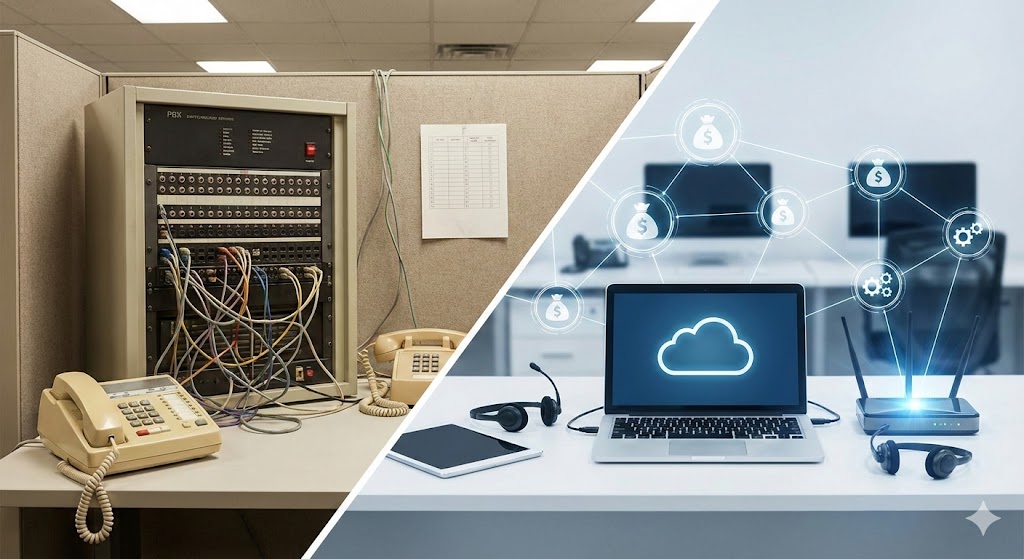
Business communication systems have evolved significantly over the past decade. As organizations continue to adopt hybrid work environments and digital collaboration tools, many businesses are re-evaluating their traditional phone systems.
One of the most common questions businesses face today is whether to continue using traditional PBX systems or transition to Cloud PBX solutions.
Understanding the differences between these technologies can help organizations choose the right communication infrastructure for long-term growth.
What Is a Traditional PBX?

A traditional PBX (Private Branch Exchange) is an on-premise phone system that manages internal and external business communications. These systems are typically installed within office premises and require physical hardware, maintenance, and dedicated telephone lines.
Traditional PBX systems have been widely used by businesses for many years due to their reliability and internal call management capabilities.
However, as businesses become more mobile and digitally connected, traditional systems often face limitations in scalability, flexibility, and remote accessibility.
What Is a Cloud PBX?

Cloud PBX is a modern communication solution hosted over the internet rather than through physical on-site infrastructure.
Instead of relying on hardware-based systems, Cloud PBX uses Voice over Internet Protocol (VoIP) technology to manage business calls, extensions, call routing, voicemail, conferencing, and communication features.
This allows employees to connect from virtually anywhere using desk phones, laptops, or mobile devices.
Key differences
| Traditional phone systems: – Require physical hardware – On-site maintenance – High maintenance costs – Limited scalability – Location-dependent – Require ongoing technical maintenance and hardware upgrades | Cloud PBX: – No physical infrastructure needed – Cloud-cased platforms managed by service providers – Lower operational cost – Easily scalable – Accessible from anywhere – Providers typically manage updates, security, and system maintenance. |
Why Business Are Moving to Cloud PBX?
The shift toward digital workplaces and hybrid work models has accelerated Cloud PBX adoption globally.
Businesses today require communication systems that support:
- Remote work flexibility
- Mobile accessibility
- Faster deployment
- Improved customer responsiveness
- Lower infrastructure costs
- Scalable operations
Cloud-based communication systems provide organizations with greater agility while improving collaboration across teams and departments.
Benefits of Cloud PBX for Modern Businesses

Improved Business Flexibility
Employees can stay connected regardless of location, improving communication continuity.
Better Customer Experience
Features such as intelligent call routing, IVR systems, and voicemail management help improve response times and customer satisfaction.
Reduced Operational Costs
Businesses can minimize hardware investments and reduce maintenance expenses.
Scalability for Growth
Cloud PBX solutions allow businesses to scale communication systems as operational needs grow.
Easier System Management
Cloud platforms simplify system administration and updates.
Industry use cases
- Retail: Managing multiple branch communications
- Healthcare: Handling patient inquiries efficiently
- Customer service: Reducing call waiting time
- SMEs: Lowering communication costs
Organizations that require flexible communication systems and reliable remote accessibility can significantly benefit from cloud-based infrastructure.
Building for Tomorrow
An outdated phone system shouldn’t be the bottleneck holding your team back. For organizations that require flexible communication systems, reliable remote accessibility, and predictable costs, transitioning to cloud-based infrastructure is no longer a luxury—it is a foundational step toward true business modernization.
Ready to modernize your communication infrastructure? At DotDash Technologies, we build cloud-based solutions designed to support your operational growth and digital transformation. Let’s look at your current office footprint together and find out exactly how much time and budget you could save by moving to the cloud.

Good article. Provides insights and explain clearly